What to wear on a hike?
Picking clothes for hiking, backpacking, and bikepacking: how I think about it, and a few gear recommendations.
Whenever a friend tells me they’re going on their first multi-day hike, the first question is almost always the same: “What clothes should I take?”
Your clothing choices will make or break your comfort and enjoyment on the trail. My answer usually depends on the activity, their ultralight ambitions, or their budget. But to streamline future conversations, I’m putting together this writeup about what I take outdoors.
Skip straight to the TL;DR at the bottom if you are lazy.
#The basics
The very first step is always to analyze the requirements of your trip. Be it hiking, backpacking, or any other outdoor activity, the questions you must ask yourself are often the same:
- What are the minimum and maximum expected temperatures?
- What is the weather forecast?
- How humid is the environment?
- What type of terrain will I encounter?
- How long will my trip be?
By answering all of these questions, you will have a much better idea of what clothes (and gear) are required for the trip. Get this wrong once and you’ll spend a night shivering, planning your exit.
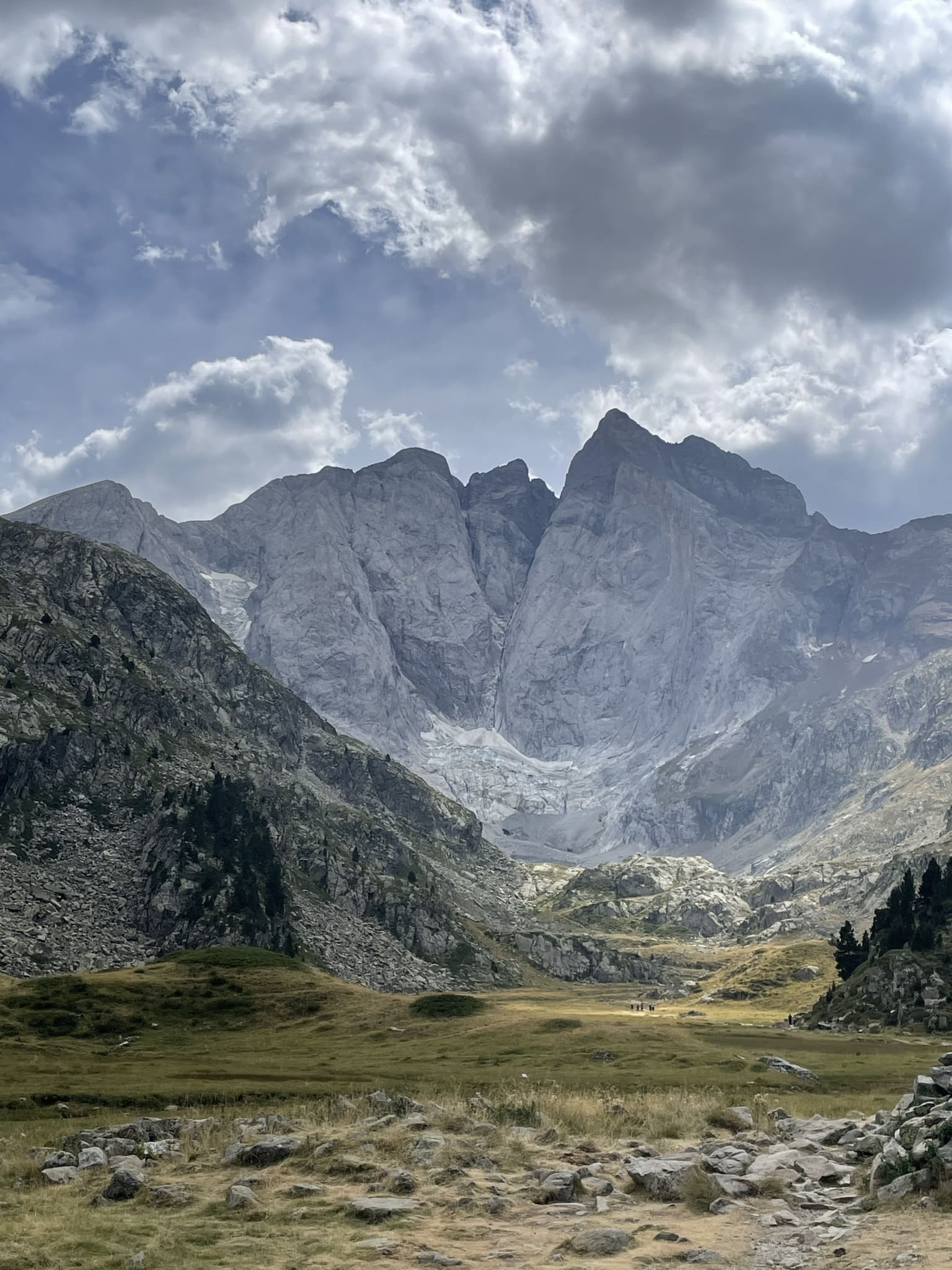
To give you a better understanding, let’s use a real trip as the baseline. In 2023 I hiked part of the GR10 in the Pyrenees:
-
Temperature: −4 °C at night, up to 32 °C during the day.
I’ll bring static insulation for the cold nights and breathable layers for the heat, no winter-grade gear needed.
-
Forecast: sunny, but storms can roll in fast in this region.
I’ll need sun protection and a light rain shell for the afternoon storms.
-
Humidity: low.
Anything dries overnight, so I can pick base layers for comfort rather than the most moisture-wicking ones.
-
Terrain: rocky trails. I took a few HRP variants to stay at altitude.
Trail runners are enough, and there’s no need for tough or more resistant clothes since I won’t be bushwhacking.
-
Length: two weeks.
I’ll pack fewer pieces (lined shorts, no underwear) and plan to wash the clothes at some point. Odor-resistant fabrics are a plus.
Okay, you now have a good baseline to know what is needed! Let’s go over this.
#Worn clothing
Let’s start with what I am wearing 99% of the time. It’s probably the most important part of your clothing system.
#Top layer
What you want from your worn top layer is mainly to be protective from the sun and to be breathable. The most effective top layers for this purpose are button-down shirts! They are protective from the sun, you can easily unbutton them when you need more cooling, plus you can find a lot of them for cheap in thrift stores.
Personally, my favorite top layers to wear are sun hoodies. They are objectively worse than button-down shirts in terms of versatility, but I like how simple they are and I like wearing simple hats (with a button-down, you will have to wear a desert hat or a brimmed one to protect your neck).
#A case of material
Material is a well-debated topic in the ultralight community. And I am not a textile expert, but… I think merino wool is overrated.
Firstly, merino wool by itself is not abrasion-resistant. In barely a few days of wearing it I already had holes and issues with my wool shirt, although you can improve that by using an 80/20 wool-polyester blend. Secondly, you are definitely paying a premium when buying anything merino. Thirdly, wool is definitely hotter than synthetic despite what brands will tell you: I have a polyester sun hoodie and a thin merino wool one, and the second one is quite a bit hotter than the synthetic hoodie.
So what material should I take? Honestly, polyester does the job. It’s not perfect, odor resistance is a drawback. But it has low water retention, it’s cheap, lightweight, and readily available. If odor resistance is a must, you could take a polyester-wool blend.
#A case of color
Despite what most people think, color impacts the heat you feel way more than you’d expect. As you probably know, black and darker colors attract more heat than others, but there is another color that attracts a lot of heat even when it’s a light shade: green.
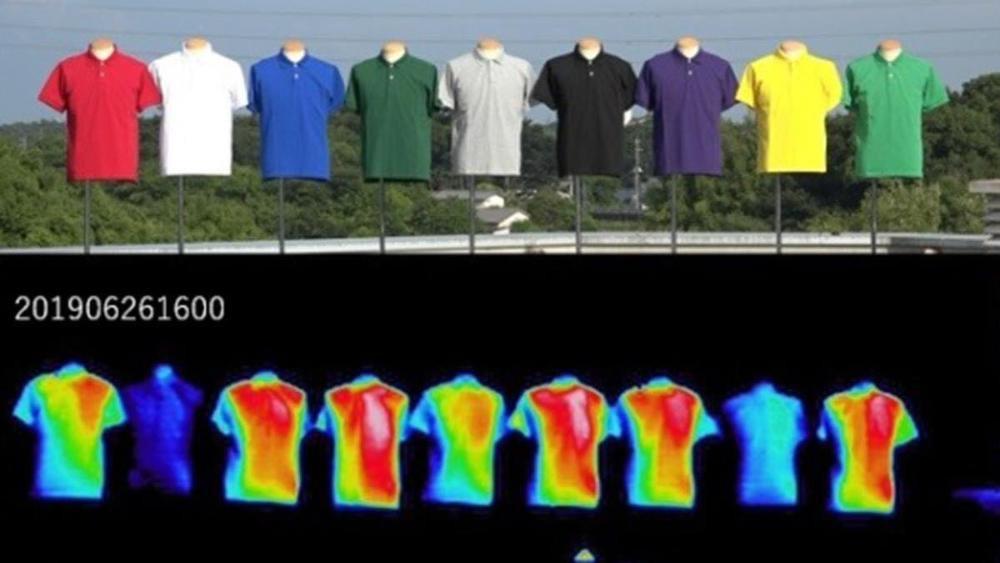
So when you are shopping for your top layer, remember: the lighter the better, but avoid green!
#Bottom layer
For the bottom layer, the choice is easier. It’s either shorts or pants (or a skirt). What decides the choice is your sensitivity to the sun, tick presence, and personal preference™.
Use shorts if you do not expect high UV exposure or extreme cold. Personally, I prefer using lined shorts without underwear. I do this for two reasons:
- It saves me some packed weight because I do not need a change of underwear.
- I personally had less chafing using lined shorts like these combined with some anti-chafing cream. However, I’ve read that after a lot of miles the lining can come off and give you chafing.
It’s not rocket science, however, so YMMV.
The other option is pants. They give you better sun protection, better tick protection (especially with permethrin), better wind protection, and they help bump up the heat in your sleeping system at night. Counterintuitive: even in summer, lightweight pants in a light color actually keep you cooler than bare legs in direct sun, because the fabric blocks the radiant heat and wicks sweat away faster than skin can. Worth reading the ultralight forums on this. For an exposed route like the HRP (above the treeline a lot of the time), pants are the better call.
So why do I keep using shorts? Pure habit. I haven’t found a pair of pants I love yet, but I keep meaning to.
#Shoes
Footwear is a very personal choice, so take what I say with a big grain of salt. You should definitely go see an orthopedist and/or a physical therapist when considering footwear, as they can help you find what is needed based on your morphology.
That said, what I prefer using are low-drop trail runners with a wide toe box. I get plenty of room for my toes and I have never had plantar fasciitis with them.
Shoes are trial and error. They are probably the most important piece of clothing in your kit, so do not try to save money by going cheap here.
#Accessories
I will bundle all accessories into one chapter because I do not have much to say on them.
#Hats
My favorite hat is a small compactable hat from Decathlon that I’ve had for years. The best hat is the one you already own. Although if you go on the button-down route for your top layer, you might need a desert hat or a brimmed one to protect your neck.
#Socks
Darn Tough, always. The price is high but you get incredible socks that are comfortable, reliable, and come with a lifetime warranty! It’s honestly very subjective because some options like toe socks could be better for you if you are blister-prone on your toes. And if you have very smelly feet, you could try Silverlight socks, but they’re at quite a premium and I’ve never tried them.
#Packed clothing
Okay, now you are into the nitty-gritty of packed clothing. This is probably
where you will save the most weight and spend the most money.
As you saw in the first chapter, you will need at minimum stationary insulation, active insulation, and a rain layer. Let’s go through each one by one.
#Stationary insulation
As the name suggests, stationary insulation is what you use when, well, you are stationary. This usually means when you are sleeping, at camp, or having a little break.
But why do you differentiate stationary from active insulation? It’s because you will use down as your insulating layer, as it provides the most heat for the weight. However, you cannot effectively use down when active because:
- Down is too hot and not breathable to wear while hiking, and will make you sweat heavily.
- Down loses its loft when wet, which makes it lose its insulating properties.
But why can’t you use a heavy fleece then? Well, to have the same insulating properties as down, the fleece would need to be 2 to 3 times heavier than the down equivalent. Which means you wouldn’t use the fleece while hiking either.
You can skip stationary insulation if you are hiking in a warm environment, or if you never stay static for long outside your sleeping bag.
#Active insulation
With your active insulation layer you want something that will keep you warm while evacuating sweat. I usually wear mine early in the morning when I am packing up camp and starting to hike, or when a chilly wind picks up.
The materials often recommended are Alpha Direct and Octa (although tecnowool looks promising). These fabrics will give you an unparalleled warmth-to-weight ratio and breathability. I do not have much to say here, since these fabrics are miles above everyone else.
They are pricey though. If you want a cheaper option, the Decathlon MH100 will get you most of the way there for less than 10 euros.
You could also pair your fleece with a dedicated wind shirt. It will bump up the warmth provided because fleeces are often sensitive to wind (especially Alpha Direct). You could just use your rain layer, and that is what I do, but wind shirts are very breathable, light, and provide a huge amount of warmth for the weight.
#Rain shell
A rain protection layer is non-negotiable, even if you have a great forecast. In the mountains, weather is unexpected and a storm can happen quickly.
#Breathable or non-breathable rain jacket?
Let’s get this straight: a jacket that is breathable AND waterproof at the same time does not exist. It’s a spectrum, and waterproofness and breathability are both ends of it. So when you are buying a “breathable waterproof jacket” you are making a tradeoff somewhere.
Also, a non-breathable waterproof jacket will never “wet out”, is often lighter, smaller to pack, and more affordable since you are not paying the Gore-Tex premium. To counteract the non-breathable part, you can either use a jacket with very long pit zips or use a breathable wind jacket for the times when you just need wind protection.
#And what about ponchos?
Ponchos are often criticized for being bad in the wind but it’s not necessarily true. And you can simply pair them with a wind shirt for heavy wind situations. They will provide you with a lot more breathability and rain protection. Haven’t tried them, however. You can find a review of a popular poncho here
#Other stuff
I’ll combine all the other clothes you could pack in one section since these are not mandatory and tied to your personal preference.
#Wind pant
My wind pant is probably one of my favorite pieces of gear I own. I use it every time I do a hiking or bikepacking trip. I even use it often in my daily life. It’s so versatile: you can use it as intended to protect you from the wind, it can protect you from the sun’s UV rays, it can bump up the temperature of your sleep system, and it barely weighs anything. It’s probably one of the most versatile pieces of gear in my pack.
But they are only useful if you hike with shorts, as they allow you to mitigate shorts’ drawbacks. If you hike with pants, you already have all the benefits a wind pant could give you.
#Gloves
I personally do not use gloves. But they can provide a great boost in comfort if you are someone whose fingers get cold easily. You need to think about gloves like you think about your whole setup: layering.
Not every layer is necessary, and on some trips you might just bring one. The first layer is liner gloves: they definitely punch above their weight in terms of warmth, and for 3-season outdoor activity they are probably all you need. If you are going to encounter below-freezing temperatures often, you could add a second layer of fleece (be it Polartec, Octa, or anything else) mittens. And then if you are going to encounter a lot of rain, you could add a layer of shell mittens. You do not want to use shell gloves since they have way more stitches than mittens and are not as reliable.
#TLDR
| Top layer | Polyester button-down or sun hoodie. Avoid nylon, avoid green, wool is overrated. |
| Bottom layer | Shorts, or lightweight pants for sun-exposed routes. |
| Shoes | Go try them for yourself and find what works for you. Please see an orthopedist. |
| Hat | The one you already own. Brimmed if you wear a button-down. |
| Socks | Darn Tough, if you can afford them, otherwise the socks you already own are fine. |
| Stationary insulation | A down jacket like the Decathlon MT100. Skip if you do not stay at camp outside your sleeping bag. |
| Active insulation | Alpha Direct/Octa fleece, or the Decathlon MH100 on a budget. |
| Rain shell | Non-breathable shell with big pit zips, or a poncho if you're into that stuff. |
| Wind pant | Optional. Dance pants or equivalent. Only worth it with shorts. |
| Gloves | Optional. Liner gloves for 3-season, layer up if needed. |